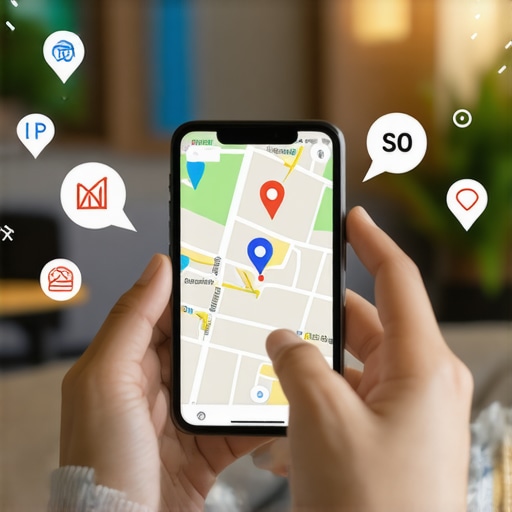
I remember the moment vividly—a small local bakery had been underperforming for months, despite great reviews and a solid neighborhood reputation. One morning, I checked their Google Maps listing—nothing appeared on the map pack. It was a lightbulb moment: I realized they had overlooked a critical component of their marketing strategy. That neglect cost them potential customers and revenue. If you’ve ever faced similar frustration—seeing competitors rank higher in local searches while your business remains invisible—you’re not alone. The truth is, many local business owners don’t fully grasp the importance of comprehensive Google Maps optimization. Today, I want to share with you how a focused, intentional approach to Google Maps Marketing can transform your local visibility and attract more customers.
Why Your Business Can’t Afford to Ignore Maps Marketing
Are you skeptical about the true value of Maps Optimization?
I used to think that just claiming my Google My Business profile was enough. I believed that posting a few photos and keeping my info updated was all I needed. Wrong. Early on, I made the mistake of thinking that simple profile management would automatically lead to higher rankings. But neglecting a curated, comprehensive maps marketing checklist meant I missed out on local opportunities—until I realized how much ground I was losing. According to a BrightLocal study, 78% of local mobile searches result in an offline purchase, which underscores the massive potential if your business appears prominently in local searches and map pack results. That early mistake taught me a vital lesson: without strategic optimization, your business risks being invisible to the ‘ready-to-visit’ customers. Ready to discover what effective local SEO and map pack strategies can do for your business? Great, because we’re about to dive into practical steps that will make your Google Maps profile work harder for you. Want to see how others have boosted their visibility? Check out our in-depth guide on [Google Maps Marketing Strategies to Dominate Local Searches](https://marketingmapschecklist.com/google-maps-marketing-strategies-to-dominate-local-searches). Now, let’s get started on building your complete, results-driven Maps Marketing checklist to turn your business into the neighborhood favorite.
Claim and Complete Your Google My Business Profile
Start by claiming your listing and ensuring all information is accurate and comprehensive. Enter your exact address, phone number, and operating hours. Add high-quality photos that showcase your business, and write a compelling description packed with relevant keywords. This foundation makes it easier for Google to rank you higher and helps customers find you easily.
Optimize Your Local SEO Elements
Focus on local keywords that your target audience uses—think about neighborhood names or specific services. Incorporate these keywords naturally into your business info, website content, and posts. Use local schema markup on your website to help search engines understand your location details, which can improve your chances of ranking in local search results.
Build and Manage Consistent Citations
List your business accurately across online directories such as Yelp, Bing Places, and industry-specific sites. Consistency is key—your Name, Address, Phone (NAP) should match exactly everywhere. Regularly audit citations for accuracy. Citations act as backlinks and signals to Google about your credibility and location authority, which enhances your map pack rankings.
Gather and Respond to Customer Reviews
Encourage satisfied customers to leave positive reviews on your GMB profile. Respond promptly to reviews, thanking reviewers or addressing concerns professionally. Reviews boost your local reputation and influence ranking algorithms. Think of reviews as social proof that can differentiate you from competitors in the map pack.
Leverage Photos and Google Posts to Engage
Consistently upload relevant photos—interior, exterior, products, services—and keep your profile active with Google Posts about special offers or updates. These signals increase engagement and signal to Google that your profile is active, influencing your visibility in local searches.
Monitor Performance and Adjust Strategies
Regularly track your local rankings, review your insights in Google My Business, and analyze visitor behavior on your website. Use this data to refine your keywords, update your profile, or improve your engagement tactics. Staying adaptive ensures continuous growth in your local presence.
Discover the full checklist to dominate local search and implement these tactics systematically for results that last.
Many local business owners believe that simply claiming their Google My Business profile and uploading basic information will secure top rankings in local search results. While foundational steps are crucial, this oversimplified view overlooks the complex nuances that truly determine visibility. In my experience, a common misconception is that Google Maps rankings depend solely on the quantity of reviews or keyword stuffing. However, algorithms are far more sophisticated, emphasizing factors like citation consistency, engagement signals, and nuanced local ranking factors. A critical trap is neglecting the importance of advanced map pack optimization strategies, such as structured data integration and behavioral analytics, which many overlook. For instance, utilizing rich schema markup on your website enhances Google’s understanding of your business location and services, directly impacting your map rankings. Moreover, you might be surprised that overly aggressive or spammy tactics, like fake reviews or keyword stuffing, can not only harm your credibility but also incur penalties—damaging your long-term growth. To truly excel, you need a comprehensive, layered approach that combines detailed checklist implementation with a keen understanding of evolving algorithms. Studies from experts like Moz highlight that local SEO ranking factors include proximity, relevance, and prominence, all of which demand careful attention beyond surface-level tactics. Are you implementing your map pack strategies correctly, or are there hidden pitfalls you’re unaware of? Dive into our full [Google Maps Optimization Checklist](https://marketingmapschecklist.com/google-maps-marketing-complete-optimization-local-seo-checklist) to ensure you’re on the right track. Remember, effective maps marketing isn’t just about visibility—it’s about building a resilient local reputation that stands the test of algorithm updates. Have you ever fallen into this trap? Let me know in the comments.Maintaining your Google Maps marketing efforts requires more than just initial optimization; it demands consistent oversight and the right set of tools. One essential tool I personally rely on is BrightLocal’s Local Search Results checker, which provides granular insights into your rankings across different locations and keywords. It’s invaluable for tracking progress and identifying areas needing adjustment. Additionally, Google Analytics integrated with your website allows me to monitor visitor behavior originating from local searches, giving me clues on how well my profile and website are performing in attracting local traffic. To streamline citation management, I’ve found Moz Local to be a game-changer—it helps keep my business information consistent across multiple directories effortlessly, preventing the common issue of citation discrepancies that can hurt your rankings. When it comes to reviews, the platform Podium makes it easy to gather, respond, and automate review requests, ensuring my local reputation stays active and positive—a crucial factor in local SEO and map pack rankings.
Predicting the future, I believe that AI-powered optimization tools will become the standard for maintaining and scaling local SEO efforts. These tools can analyze large datasets, predict ranking fluctuations, and recommend immediate adjustments, saving time and boosting results.
How do I keep my Maps marketing efforts effective over time?
Regular audits are vital. Schedule monthly reviews of your local rankings using tools like BrightLocal, and set up alerts for citation inconsistencies or negative reviews. Keep your Google My Business profile fresh by posting updates, offers, and photos consistently. Also, track review sentiment to identify potential reputation issues before they escalate.
A practical tip I recommend is integrating schema markup on your website. According to Google’s developer documentation, implementing structured data can significantly improve your visibility in local search results and the map pack. Make it a habit to audit your schema regularly to ensure all business details are accurate and up-to-date.
Remember, a proactive approach with the right tools not only sustains your current rankings but also positions your business to capitalize on emerging local SEO opportunities. For a comprehensive guide on how to implement these strategies seamlessly, check out our detailed [Maps Marketing Checklist](https://marketingmapschecklist.com/maps-marketing-checklist-proven-strategies-for-better-visibility-in-2025). Ready to elevate your long-term Maps marketing game? Try setting up automated rank tracking today—it’s a simple step that offers immense insights and peace of mind.
Snippets from My Own Map Pack Journey
One of the biggest lessons I learned is that neglecting detailed citations can be a silent killer of rankings. I once overlooked the importance of citation consistency, which caused my local rankings to plummet despite many reviews and good content.
Another eye-opener was realizing that visual engagement through high-quality photos isn’t just about looks; it’s a strategic move that can influence clicks and conversions significantly. Small tweaks in imagery boosted my visibility more than I expected.
Finally, I discovered that swift review responses do more than just build customer loyalty—they also subtly signal to Google that your profile is active and trustworthy, leading to better map pack positioning. Consistency is key, and I wish I had started this practice earlier.
Tools That Power My Maps Marketing Strategies
The cornerstone of my success has been leveraging tools like Your Essential Local SEO Checklist which offers a clear framework for optimizing every aspect of local search. I also rely on BrightLocal’s Map Pack Checklist to identify overlooked opportunities daily. For citation management, Moz Local has been a game-changer in ensuring data consistency across directories. Lastly, Google Analytics helps me track real visitor behavior, which guides my ongoing adjustments and refinement of strategies.