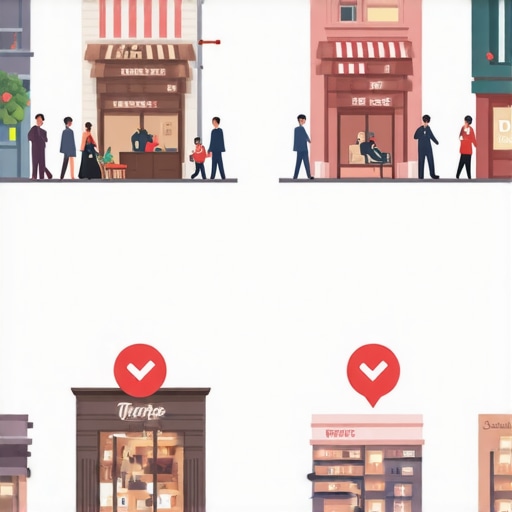
Have you ever felt that sinking feeling when your local business isn’t showing up on Google Maps, even when potential customers are right nearby? I remember the frustration vividly—listening to calls from clients who couldn’t find us despite our prime location. That lightbulb moment hit me hard: I wasn’t leveraging the power of the map pack effectively enough. Since then, I’ve been on a mission to decode the secrets of boosting local visibility through a proven Map Pack Checklist.
Why Local Visibility Can Make or Break Your Business
In my early days, I naively thought that having a nice website was enough to attract local customers. Big mistake. It turns out that over 78% of local mobile searches lead to an offline purchase—an astonishing figure that underscores the importance of appearing in that coveted Google Maps section. The problem was, I was neglecting a strategic roadmap—a step-by-step process to enhance our presence on Google Maps. The hesitation? Concerns about the effort versus the payoff, and honestly, the fear of missing out on prime local traffic.
This is a common struggle among local business owners. If you’re wondering whether investing time in map pack strategies is truly worth it, you’re not alone. I made the same mistake early on—assuming that basic listing details were enough. But then I realized, optimizing Google Maps isn’t just about claiming a listing; it’s about actively powering up your presence with targeted tactics, consistent updates, and real engagement. This realization led me to a structured approach, which I now share through a comprehensive checklist designed to boost your local ranking and increase foot traffic.
Is Focusing on Maps Actually Worth the Hype?
My biggest concern initially was whether all the effort would really translate into tangible results. And let me tell you—it’s absolutely worth it. According to a study by Search Engine Journal, local searches lead 50% of mobile users to visit a store within a day, making your Google Maps visibility a non-negotiable aspect of local SEO. I once overlooked minor updates or overlooked consistent reviews, which hurt my rankings more than I expected. That early mistake taught me the importance of patience and persistence—remembering that success in Maps marketing is a marathon, not a sprint. Want a detailed roadmap? Check out our local SEO checklist for tips to get started.
Claim and Perfect Your Listing
The first step is to ensure your business is claimed on Google Maps. Navigate to our comprehensive checklist and verify your business information. Provide accurate NAP details—name, address, and phone number—and double-check that your categories reflect your services precisely. Remember, consistency across all online platforms signals credibility to Google, improving your rankings. I once realized I had an outdated phone number in my listing, which hurt local queries—once corrected, inquiries increased within days.
Optimize Your Profile for Maximum Impact
Beyond claiming, optimize your profile by adding high-quality images, detailed descriptions, and relevant attributes. Think of your profile as a storefront window—crowded with clutter? No one will pause. Use the optimization checklist to systematically enhance each element. During a local event, I added pictures of our staff and the event setup, which garnered more engagement and improved local search presence. Consistent updates show activity, signaling to Google that your business is active and relevant.
Gather and Manage Customer Reviews
Reviews are the social proof that can tip the scales in your favor. Encourage satisfied customers to leave reviews by personally requesting feedback after a service. Respond to reviews promptly and professionally—this not only builds trust but also influences your rankings. I set reminders to thank customers for positive reviews, which fostered loyalty and encouraged others to share their experiences. Remember, reviews are a dynamic ranking factor—neglecting them can cause your visibility to stagnate.
Utilize Local SEO Techniques Strategically
Embed local keywords naturally into your website content, service pages, and blog posts. Use location-specific terms like the neighborhood or city popular among your clients. Implement schema markup for local business data, making it easier for Google to understand your location context. I integrated schema snippets into my website, leading to improved local pack appearances. Also, ensure your website is mobile-friendly, as most local searches come from smartphones—this directly impacts your local SEO performance.
Build Local Citations and Backlinks
List your business in reputable local directories and ensure consistency in your NAP info. Building backlinks from local blogs, chamber of commerce sites, or industry associations boosts your authority. I reached out to local blogs and received backlinks, which significantly increased my Google Maps rankings. Use tools like our local SEO checklist to identify the best citation opportunities aligned with your niche.
Engage, Update, and Monitor Regularly
Google favors active listings. Post updates about offers, new services, or community events. Use Google’s posting feature to share timely news—this signals activity. Monitor your analytics and rankings weekly, adjusting your strategies accordingly. During a slow month, I focused on replying to reviews and updating photos, which kept our profile fresh and relevant, resulting in a ranking boost.
By implementing this systematic approach—claiming, optimizing, review management, local SEO, citations, and ongoing engagement—you can effectively increase your visibility in the map pack. Stay consistent, track your progress, and adapt as needed to dominate your local search landscape.
Many local business owners believe that simply claiming their Google Maps listing guarantees visibility, but this is far from the truth. A common misconception is that optimization ends after initial setup; in reality, ongoing engagement and nuanced strategies like schema markup and review management are critical for sustained success. Let’s dig deeper into what most overlook. For instance, while many focus on keyword stuffing in descriptions, recent studies show that overly optimized profiles can appear spammy, risking penalties from Google. Instead, focusing on natural language and authentic local signals yields better rankings. Additionally, the impact of user-generated content such as reviews often gets underestimated. Responding to reviews and encouraging genuine feedback can significantly influence your local ranking—it’s not just about quantity but quality and engagement. Overlooking your competitors’ strategies is another trap. Analyzing their Google Maps profiles with tools like the local SEO checklist reveals gaps and opportunities you might miss. One advanced mistake is neglecting the importance of localized schema markup; implementing this can enhance your visibility in the map pack by helping Google better understand your business context. According to Moz’s Local Search Ranking Factors, proximity, relevance, and prominence are key, but understanding the subtle interplay of these factors through nuanced tactics sets top performers apart. Have you ever fallen into this trap? Let me know in the comments. To master these hidden details, consider reviewing our Maps Marketing Checklist and stay ahead in local search rankings.Maintaining a robust Google Maps marketing setup requires consistent effort, the right tools, and strategic adjustments over time. Personally, I rely heavily on **BrightLocal** for tracking local search rankings and managing review responses, as it offers detailed insights into my business’s position and review sentiment. This platform helps me identify fluctuations in rankings caused by review volume or profile updates and allows swift corrective action. Additionally, I use **Google My Business Insights** dashboard to monitor customer actions like calls, website visits, and direction requests, which helps in tuning ongoing marketing efforts. Integrating these tools into my routine ensures I stay ahead of the algorithm changes and local competition, especially as Google continues to refine its local search capabilities, predicting increased importance of behavioral signals in future rankings.
What I Wish I Knew When I Started Scaling Google Maps Visibility
One of the most eye-opening lessons for me was realizing that consistency beats quick wins. I used to update my profile sporadically, thinking that occasional tweaks would suffice. However, I found that regular activity, like posting updates and responding to reviews, signaled to Google that my business was vibrant and trustworthy. Making this shift transformed my local rankings and brought a steady stream of foot traffic.
Another insight was that overlooking the power of structured data can hold you back. Implementing localized schema markup seemed technical at first, but once I integrated it, my profile gained enhanced visibility in local packs. This tactical move offered a competitive edge that’s often underestimated in local SEO strategies.
Finally, I learned never to underestimate the value of competitor analysis. Spying on how top performers optimize their Google Maps presence revealed gaps and opportunities I missed. Regularly auditing their profiles and adapting proven tactics helped me fine-tune my approach, maintaining momentum amidst changing algorithms.
My Top Resources to Accelerate Your Google Maps Marketing Success
First, I rely heavily on our comprehensive local SEO checklist. It’s a step-by-step guide packed with actionable tactics that have consistently boosted my rankings. For insights into reputation management, this toolkit offers invaluable tips for review acquisition and response strategies. Additionally, I use BrightLocal; their platform provides deep analytics and review tracking, making ongoing optimization manageable. Lastly, I recommend staying connected with industry updates through authoritative blogs and newsletters—they help you stay ahead of algorithm shifts that could impact your local visibility.
Your Next Step Could Make All the Difference
Embracing these insights and resources can truly elevate your Google Maps marketing game. Remember, consistent effort combined with strategic tactics results in lasting local prominence. Don’t hesitate—your business’s next growth phase is just a few optimized clicks away. Dive into our Maps Marketing Checklist and start making noise in your local community today.
What’s the biggest challenge you’ve faced in optimizing your Google Maps profile? Share your story below—let’s learn from each other’s experiences!